The Hidden Value in Tank Vapors
Tank vapors accumulate in the headspace as hydrocarbons flash off from crude oil and condensate in storage tanks. Because these vapors are rich in light hydrocarbons like methane, ethane, propane, they often carry a higher heating value (BTU content) than the raw gas stream coming directly from the wellhead.
In a properly designed system, these vapors can be captured, compressed, and routed into a sales line or used as fuel. However, when oxygen contamination enters the system, through thief hatches, faulty seals, tank “breathing,” or maintenance activities, this valuable gas becomes off-spec and cannot be sold into the sales line.
At that point, operators face a costly dilemma.
The Role and Cost of Slam Valves
To protect pipeline integrity and meet gas quality specifications, many gas gatherers use emergency shutdown systems, commonly known as slam valves. These valves are designed to automatically shut in production when off-spec conditions – such as elevated oxygen levels – are detected.
While effective at preventing contaminated gas from entering the pipeline, slam valve activation creates two significant economic consequences.
First, shutting in the gas stream often means shutting in the entire well. Since oil and gas are co-produced, halting gas flow disrupts oil production as well. This results in immediate lost revenue and can introduce operational instability when restarting the system.
Second, and often more overlooked, is what happens to the tank vapors during these events. With the sales line shut off, vapors are diverted to a flare or enclosed combustion device (ECD). Instead of being captured and monetized, they are combusted – destroying a high-value product that could otherwise generate profits.
Tank Vapor Flaring: A Direct Hit to the Bottom Line
Flaring off-spec BTU-rich tank vapor is not just a safety and compliance measure – it is a direct economic loss. Every MCF of tank vapor gas flared represents forgone revenue. Over time, these losses can accumulate into substantial financial impact.
Consider a simplified scenario: a site producing even a modest volume of tank vapor with elevated BTU content. If that gas were captured and sold, it could command a premium due to its energy density. Instead, when flared, its value is reduced to zero, while still incurring operational costs associated with combustion, emissions monitoring, and regulatory reporting.
Moreover, repeated slam valve events can compound these losses. Each incident not only halts production but also initiates a period of flaring that may last hours or even days, depending on how quickly the system can be stabilized and brought back into compliance.
Decontamination as a Value Creation Strategy
The solution is not simply to avoid flaring, it is to prevent the conditions that make flaring necessary in the first place. This is where gas decontamination technologies play a critical role.
By removing oxygen and other contaminants from tank vapors before they reach the sales line, operators can maintain continuous flow and avoid triggering slam valve events. Instead of treating off-spec gas as waste, it becomes a recoverable asset.
Decontamination systems—whether based on catalytic processes, membrane separation, or chemical treatment—enable operators to:
- Restore gas quality to pipeline specifications
- Maintain uninterrupted production
- Capture and sell high-BTU vapors
- Reduce reliance on flaring and associated emissions
From an economic standpoint, this shifts tank vapors from a liability to a revenue stream.
The chart below illustrates the potential lost revenue from flaring off-spec tank vapor gas instead of capturing and monetizing it, given certain assumptions.
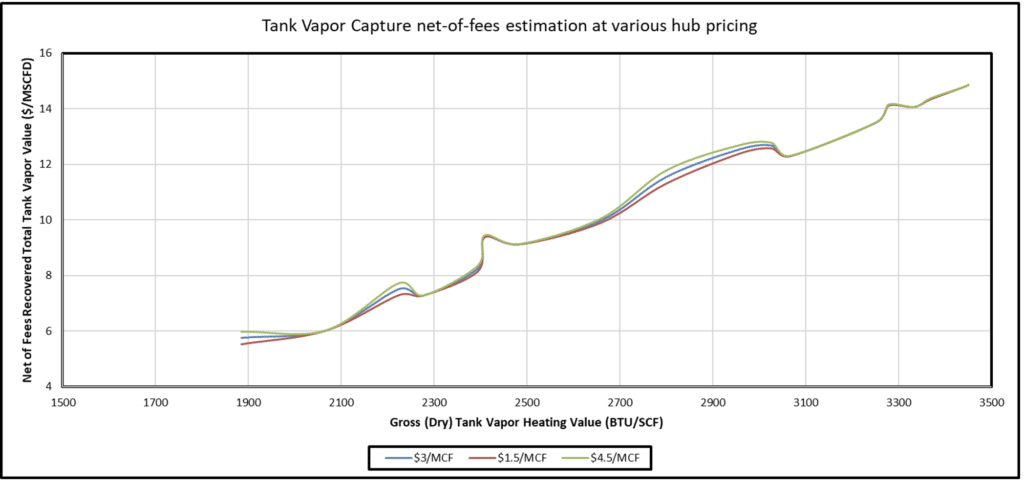
Although there are several assumptions in this analysis, it demonstrates that even at a relatively low natural gas price tank vapor rich in NGLs can be extremely valuable.
In the example above, at a price of $1.50 per MCF tank vapor with energy value of 2900 BTU can potentially generate $12,000 per day in incremental revenue.
This chart is sourced from our new white paper Managing Oxygen Corrosion Risk in Natural Gas Pipelines.
DOWNLOAD THE WHITE PAPER: Managing Oxygen Corrosion Risk in Natural Gas Pipelines with ZerO2
The Solution: ZerO2® Oxygen Removal System
The ZerO2® oxygen removal system is a proprietary catalytic oxygen removal system specifically engineered for natural gas applications. ZerO2 units eliminate oxygen from tank vapor gas from multiple sources (i.e., oil storage tanks, produced water storage tanks, truck loadouts, etc.), allowing you to sell what is typically the most valuable gas on the well site – high-BTU tank vapor gas – instead of flaring it or losing it to venting.
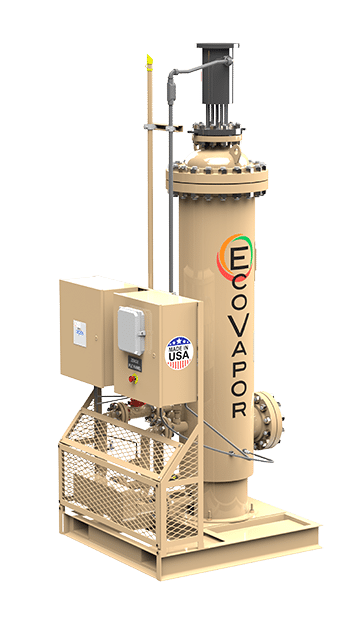
The ZerO2 system continuously reduces oxygen to below even the most stringent pipeline tariff limits, ensuring compliance even under variable operating conditions. The ZerO2 system can economically achieve the most stringent oxygen concentration restrictions in the U.S., like those imposed by the MPSC in Michigan (<5 ppm) for enhancing public safety and energy security.
ZerO2 technology is reliable, having accumulated a long track record of 99.5%+ mechanical availability from more than 300 units deployed across more than 15 states serving oil & gas production and biogas operations.
Tank Vapors: Risk vs. Reward
For too long, tank vapors have been viewed through the lens of risk management – something to control, contain, or eliminate. But this perspective overlooks their inherent value.
By investing in decontamination and recovery systems, operators can reframe tank vapors as a strategic asset. Instead of “slamming the door” on off-spec gas and accepting the consequences, they can unlock a new source of revenue, improve operational resilience, and align with evolving environmental standards.