What is Renewable Natural Gas (RNG)?
Renewable natural gas (RNG) is pipeline quality gas manufactured from the decomposition of organic matter, otherwise known as biogas. To meet pipeline requirements, biogas must be upgraded to RNG or biomethane (biogas purification), so it can be sold commercially as compressed natural gas (CNG) or liquefied natural gas (LNG). RNG is also used as a replacement for conventional natural gas in electricity generation.
In this article, we cover at a high level the differences between the most commonly used estimates for facility design and actual data derived from field observation.
RNG Feedstocks
The Environmental Protection Agency (EPA) notes that “The biogas used to produce RNG comes from a variety of sources, including municipal solid waste landfills, digesters at water resource recovery facilities (wastewater treatment plants), livestock farms, food production facilities and organic waste management operations.”
There are four major sources of RNG. In the U.S., landfills are the third largest source of human-generated methane emissions and currently the largest source of biogas. Landfills offer a lower-cost, large-scale source of organic material that generates methane as it decomposes within the landfill.
Livestock and agricultural sources are the second largest source of RNG and its contribution is growing rapidly. The manufacture of animal waste into usable energy is one of the few carbon-negative sources of energy, since a waste product and methane source is removed while displacing conventional natural gas produced from oil and gas wells. Animal waste is typically generated using anaerobic digesters that allow for the controlled conversion into a commercial gas product.
The other two biogas sources are food waste from manufacturers, wholesalers, restaurants, supermarkets, and institutions, and from the digestion of solids recovered in wastewater treatment.
The table below shows the status and contribution of RNG projects in the U.S. as of the end of 2021.
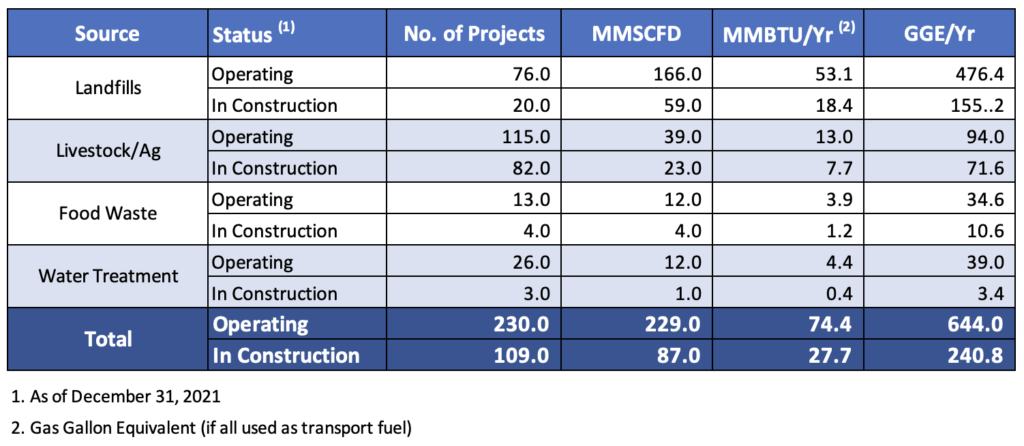 Source: Argonne National Laboratory 2021 RNG Database
To provide some perspective on the size of the RNG market, the energy produced from operational projects and those under construction, on a gas-equivalent basis, can fuel all the cars in the State of Louisiana for one year.
RNG Sources and Uses
Today most RNG is sold as alternative transportation fuel due to its classification as a low-carbon fuel under federal and state fuel standards and demand is driven to a large degree by renewable energy standards set by regulatory agencies.
The diagram below shows the uses of the 74 trillion BTU of RNG produced in 2021.
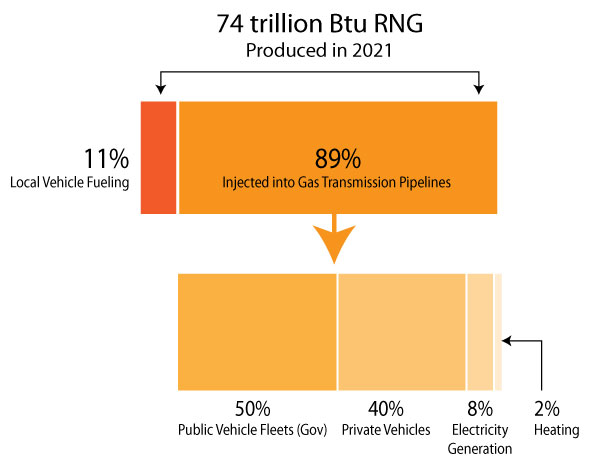
Source: Economic Analysis of the US Renewable Natural Gas Industry, RNG Coalition, December 2021
To meet commercial specifications, biogas must be upgraded into biomethane. Upgrading involves the removal of several contaminants, including water, carbon dioxide, oxygen, hydrogen sulfide, siloxanes and other trace elements.
Water and hydrogen sulfide (H2S) are often removed prior to further upgrading using membranes, pressure swing adsorption, or solvent or water scrubbing. Hydrogen sulfide can be removed using chemical scrubbing or activated carbon filtration, while oxygen can be partially reduced using membranes and effectively removed using a catalytic process.
The EcoVapor Biogas Upgrading Technologies
EcoVapor’s solutions for decontaminating natural gas of H2S and oxygen are working to upgrade biogas to RNG today. Our environmentally friendly technology helps biogas producers leverage the RNG market opportunity in a cost-effective and operationally efficient way.
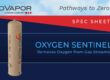
Our proprietary ZerO2 technology efficiently removes oxygen with no toxic byproducts and is available in a variety of sizes to meet specific applications.
Our Sulfur Sentinel safely and efficiently removes H2S from biogas in low pressure applications without any negative downstream process effects using an engineered solid media. Media changes are simple, efficient and disposal of the non-toxic spent media requires no special facilities.
EcoVapor is your partner for capitalizing on the RNG market.
Contact us today for a free consultation to determine if our RNG solution is right for your application.
About EcoVapor
EcoVapor Recovery Systems provides solutions to pressing oil and natural gas production problems. EcoVapor’s technical team has extensive expertise in vapor recovery processes and includes world-class engineers with an innovative approach to industry challenges. In over 120 installations in all major US basins, our patented ZerO2 solution helps oil and gas producers meet their air emissions and regulatory compliance goals. EcoVapor is headquartered in Denver, Colorado and has field locations in Greeley, Colorado and Midland, Texas.
Contact
EcoVapor Recovery Systems
1422 Delgany Street, Suite 100
Denver, CO 80202
Email: Info@EcoVaporRS.com
Phone: 844-NOFLARE (844-663-5273)